
Garden creation · southern Luxembourg
Ponds and water features
Water draws in everything that lives
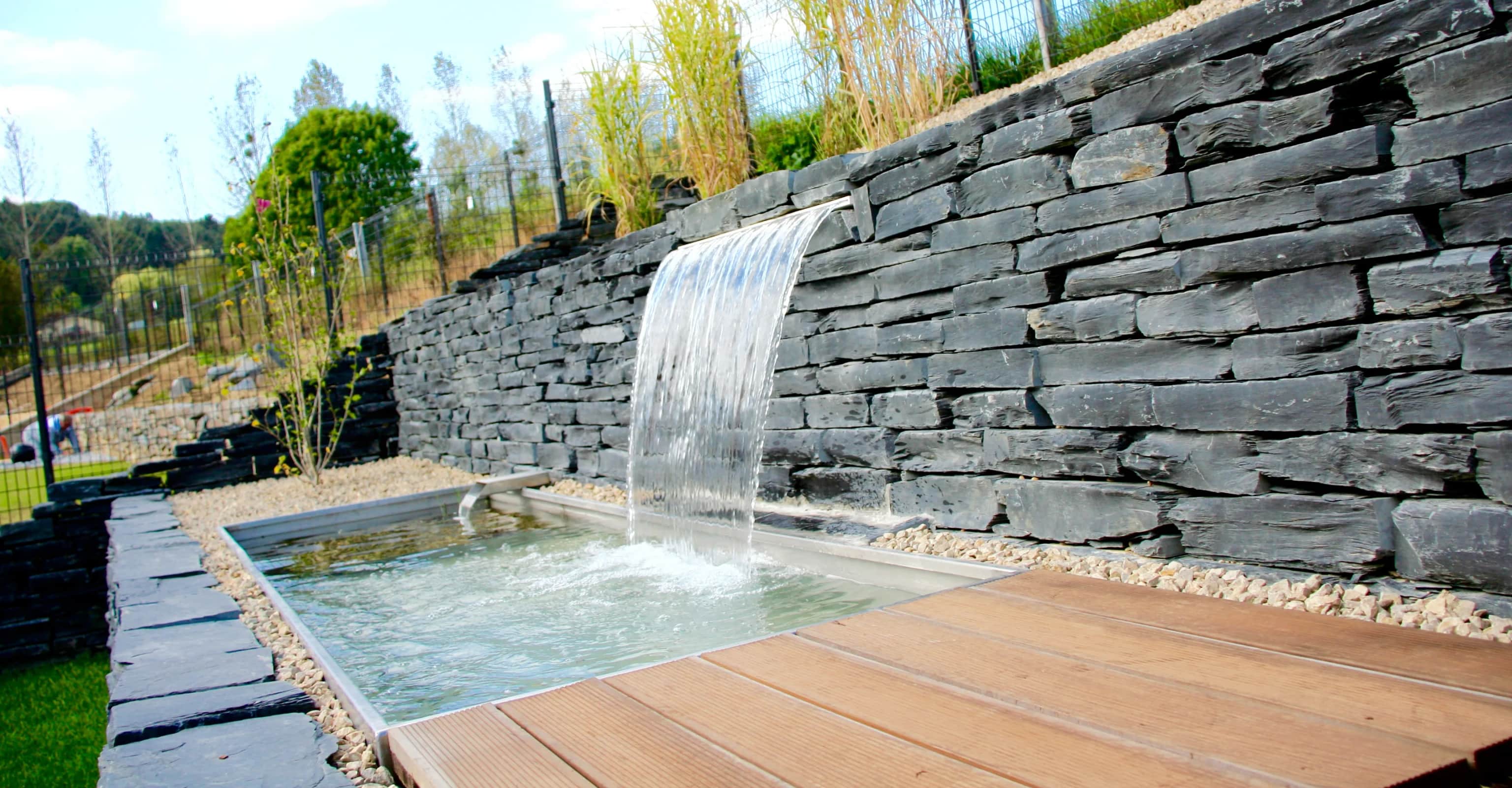
A pond changes a garden more than anything else you can add: dragonflies within the first week, birds coming to drink, frogs the first year. We create water features that find their balance naturally, with no chlorine and no chemicals.
We work from southern Luxembourg up to Mersch.
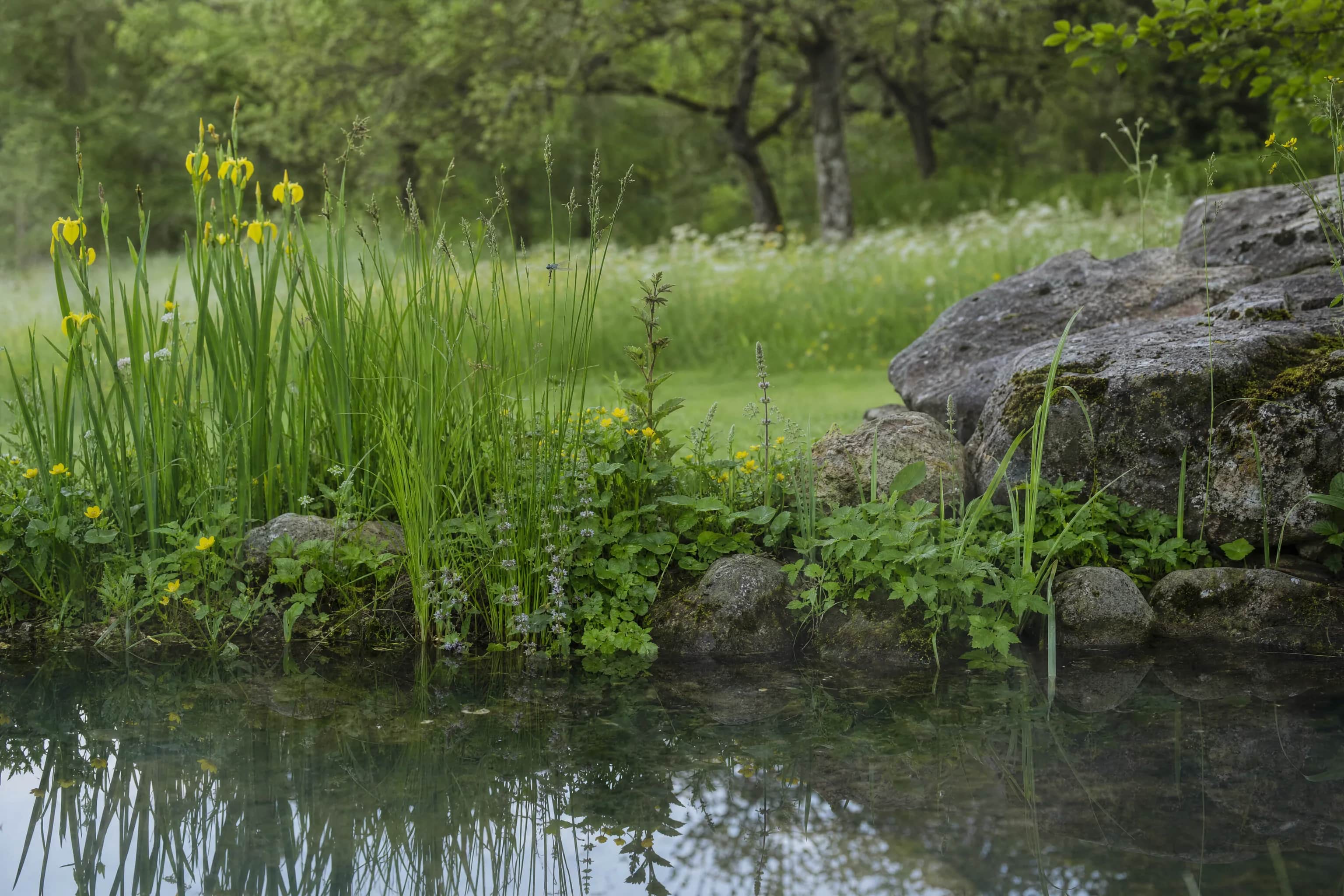
A well designed pond balances almost by itself: shelves at different depths, a generously planted margin (iris, rushes, water mint) that filters the water, and a bottom going down to eighty centimetres so that life can get through the winter. The rule is simple: the larger the planted share, the clearer the water.
From a small preformed pool to a natural pond on an EPDM liner, the technique fits the space and the budget. A stone fountain or a cascade adds movement, sound and the oxygen that goes with it. We size the pump tightly: water should murmur, not drone.
With young children we talk about it plainly: a shallow area, a grille just under the surface, or simply putting the project off for a few years. A pond should be a pleasure, never a worry.
What this covers
Small pool
Preformed or on a liner, at the scale of a courtyard or a patio. Life settles in just as fast as in a large one.
Natural pond
Planted margins, depth shelves, balance without heavy equipment: a real living habitat, at garden scale.
Fountain
A drilled stone, a bowl or a water blade: the sound of water, even where a pond will not fit.
Cascade
A change of level becomes an asset: the water circulates, takes up oxygen and brings the garden alive to eye and ear.
How it works
Studying the site
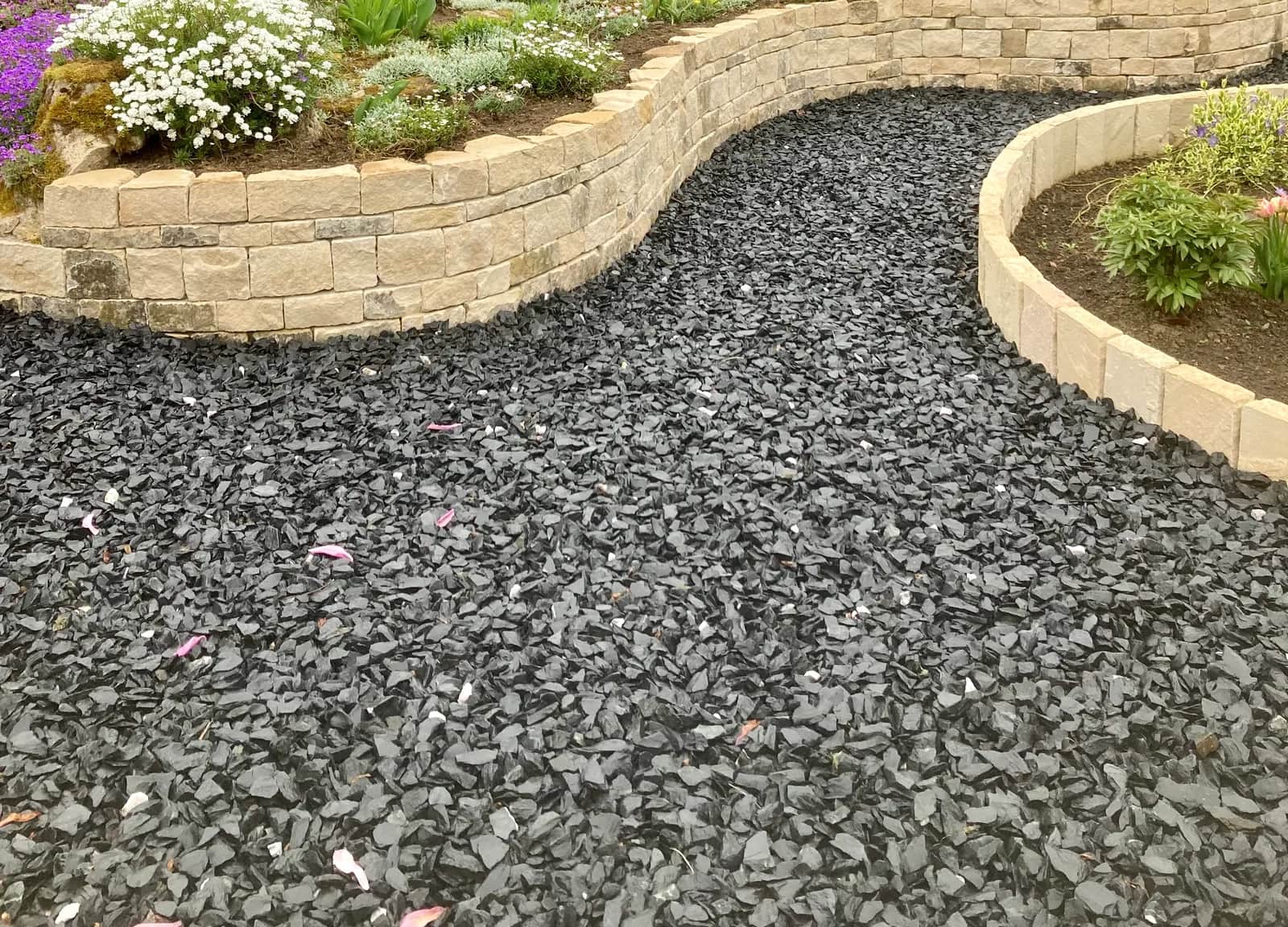
We look at the slope, the soil type, the sunlight and where the leaves come from. A pond wants sun for a good part of the day, but not directly under a large deciduous tree: every autumn the fallen leaves end up as silt on the bottom.
The excavation
Digging follows the shelves drawn: a margin at ten or twenty centimetres for marginal plants, an intermediate shelf, a bottom at eighty centimetres where wildlife overwinters below the frost. The spoil stays on site where it can shape a mound or carry a rock garden.
The lining
Geotextile underlay, then an EPDM liner in a single piece where the area allows. This flexible membrane follows the shelves and lasts several decades. The edges are anchored in a perimeter trench, invisible once the pond is full.
The planting
This is what makes the water clear: iris, rushes and water mint on the margins, submerged oxygenating plants, water lilies on the bottom where there is room. We plant generously. The larger the planted share, the fewer algae you will have.
Filling
Filling is done slowly, and then you wait. For a few weeks the water clouds and turns green, before clearing on its own once the plants take over: do not judge a pond in the first month, and above all do not empty it.
The right season
We prefer to dig in spring or autumn, when the soil works well and aquatic plants establish quickly. A pond filled in April is balanced before summer; an autumn pond gets through the winter and starts strongly the following spring. High summer remains possible, but the water takes longer to find its balance.
Winter
Possible depending on the case
Spring
Recommended period
Summer
Possible depending on the case
Autumn
Recommended period
Frequently asked questions
Often asked for together with
A garden to imagine, or to rethink?
We come and look on site, and the quote is free. We answer messages within two working days.