
Garden creation · southern Luxembourg
Green roofs
A roof that lives, instead of a roof that bakes
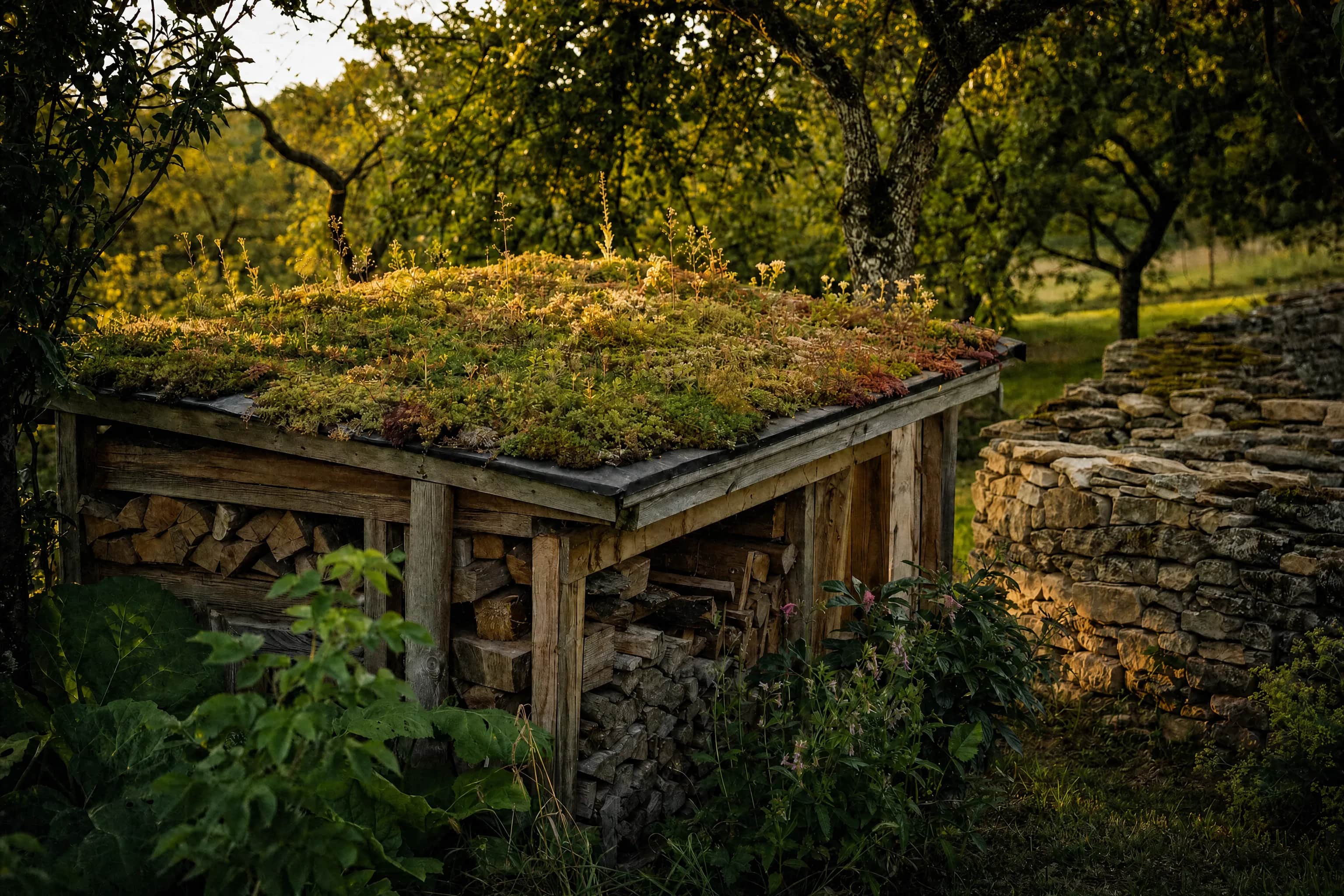
On a garden shed, a carport or an outbuilding, a green roof replaces a dead surface with a meadow in miniature: cooler in summer, absorbent under a downpour, alive all year round.
We work from southern Luxembourg up to Mersch.
A green roof holds back a good share of the rainwater and releases it slowly. The rest evaporates or reaches the gutter hours later. Under our summer storms, that is very concrete. It also protects the waterproofing from sunlight and frost: a planted roof ages better than the same roof left bare.
The extensive version is the most common: a few centimetres of substrate, a mat of sedums and undemanding perennials, two maintenance visits a year. It is light and goes onto most existing sheds and carports, once the structure has been checked.
The intensive version, which is thicker, allows real planting (grasses, perennials, small shrubs). It needs a structure sized for it: we check the loads before promising anything, and we tell you plainly if your roof cannot carry it.
What this covers
Extensive planting
Thin substrate, sedums and undemanding perennials, almost no maintenance. The answer for most sheds and carports.
Intensive planting
Thick substrate, a real plant palette, on a structure checked and sized for the load.
On a new or existing shed
We plant the roof of the shed we build, or of yours, once the structure and the waterproofing have been checked.
How it works
Checking the structure
We go up and look: span, rafter sizes, condition of the waterproofing, pitch and upstands around the edges. This stage decides everything else. Waterlogged substrate has a real weight, and we will not lay it on a roof we are not sure of.
The quote
It states the type of planting, the depth of substrate, the load per square metre once saturated and the number of maintenance visits. If the roof structure has to be strengthened or the waterproofing redone first, that is priced separately and said plainly.
The laying
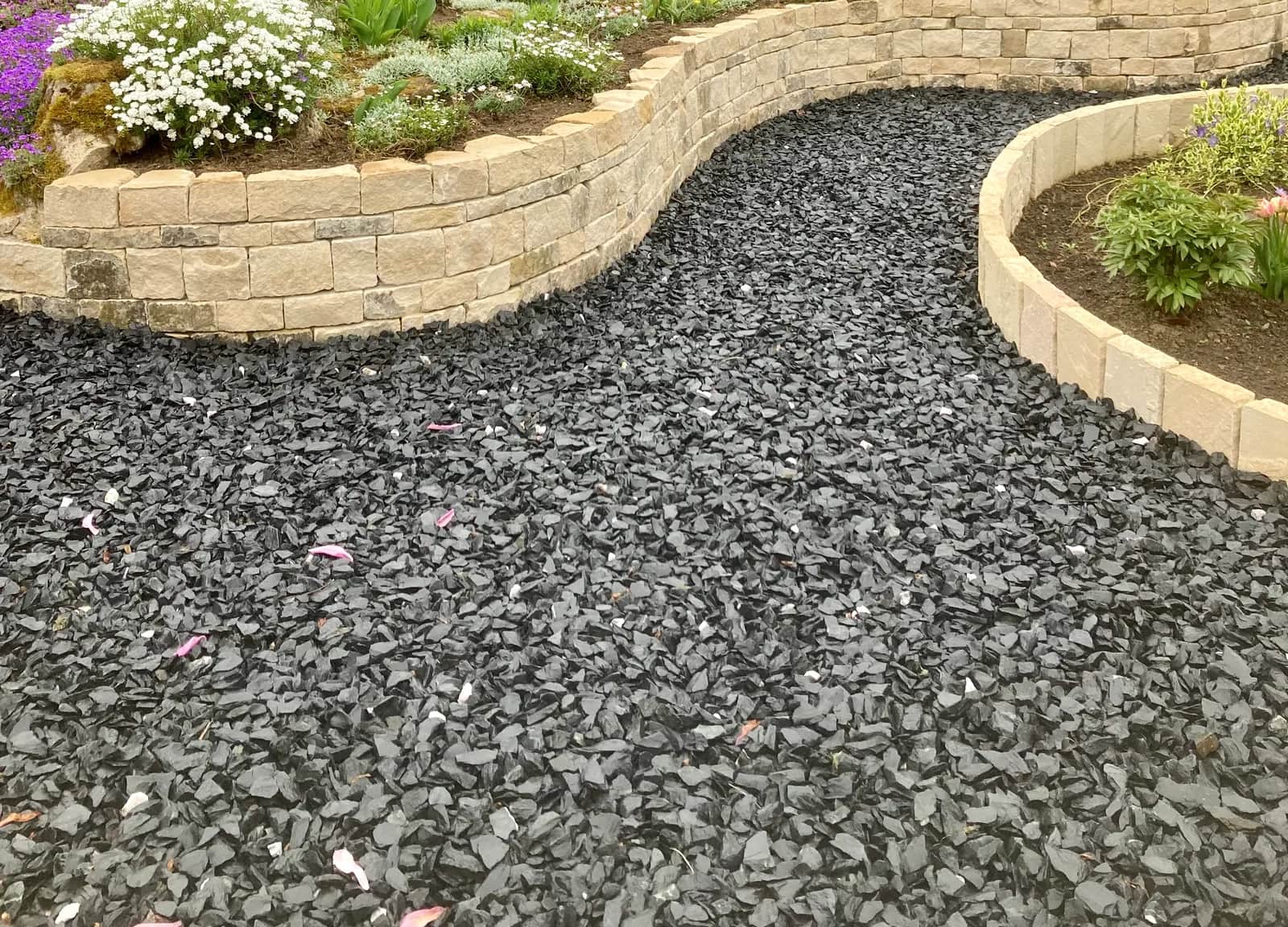
Root barrier, drainage layer, filter, substrate, then a sedum mat or plug plants depending on the option chosen. Edges and outlets are bordered with gravel so that water always finds its way.
Establishment and follow-up
Watering for the first few weeks if the season calls for it, then two visits a year: removing woody seedlings, checking the outlets, a light feed in spring. A maple seedling forgotten on a roof becomes a waterproofing problem within five years.
The right season
Spring and autumn are the right times to lay: the plant mat roots with the rain, without suffering drought. A roof laid in the middle of July needs watching and watering for weeks; we would rather tell you to wait until September.
Winter
Possible depending on the case
Spring
Recommended period
Summer
Possible depending on the case
Autumn
Recommended period
Frequently asked questions
Often asked for together with

A garden to imagine, or to rethink?
We come and look on site, and the quote is free. We answer messages within two working days.