
Workshop · Kayl · southern Luxembourg
Metalwork
Cut, welded, made for one garden only
Steel, stainless or corten: we cut and weld it ourselves. Fences and gates, screening panels, planters, lamps. None of this exists in a catalogue, each piece is drawn for one place and one only. We stay in the garden: structural metalwork for buildings is not our trade.
We work from southern Luxembourg up to Mersch.
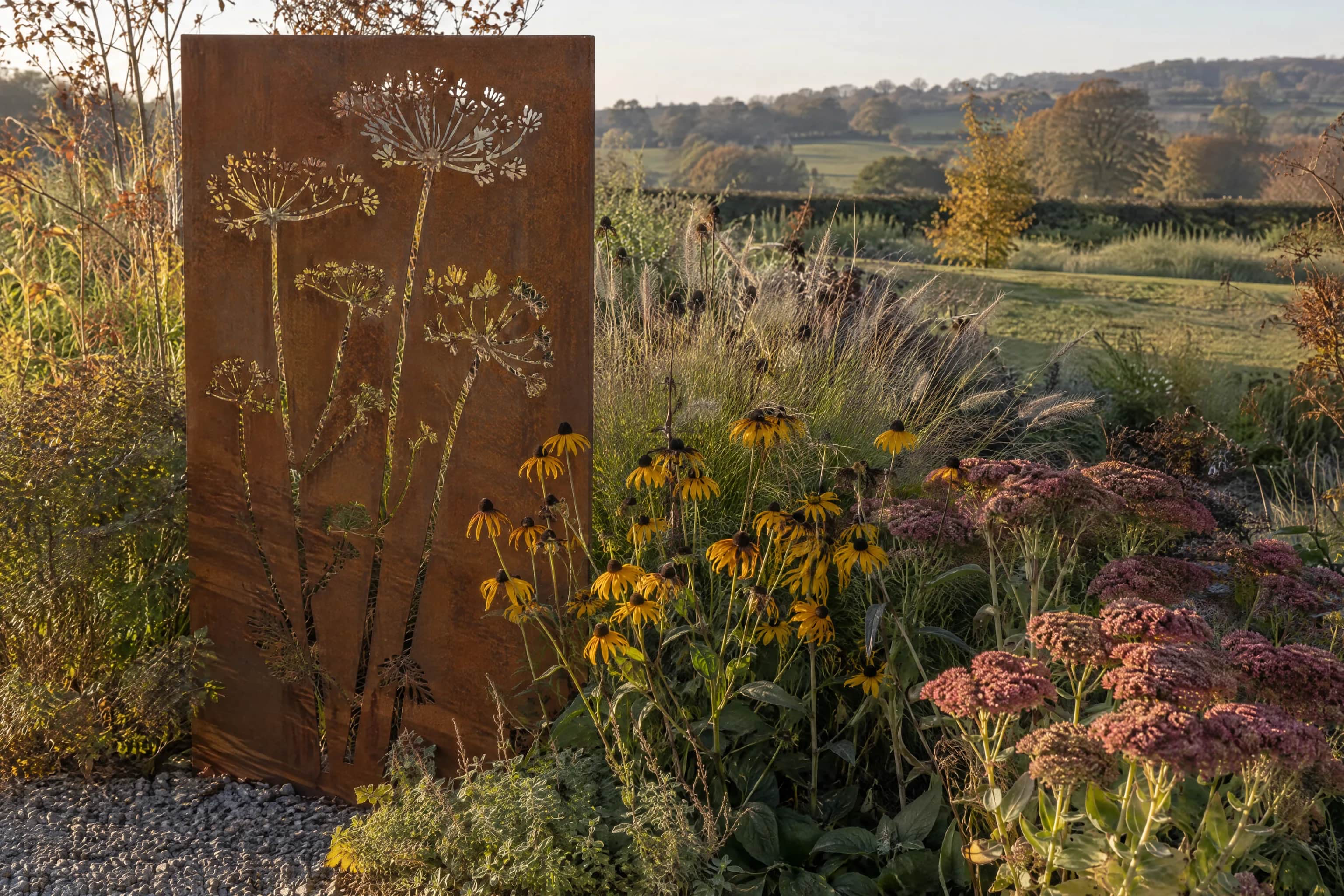
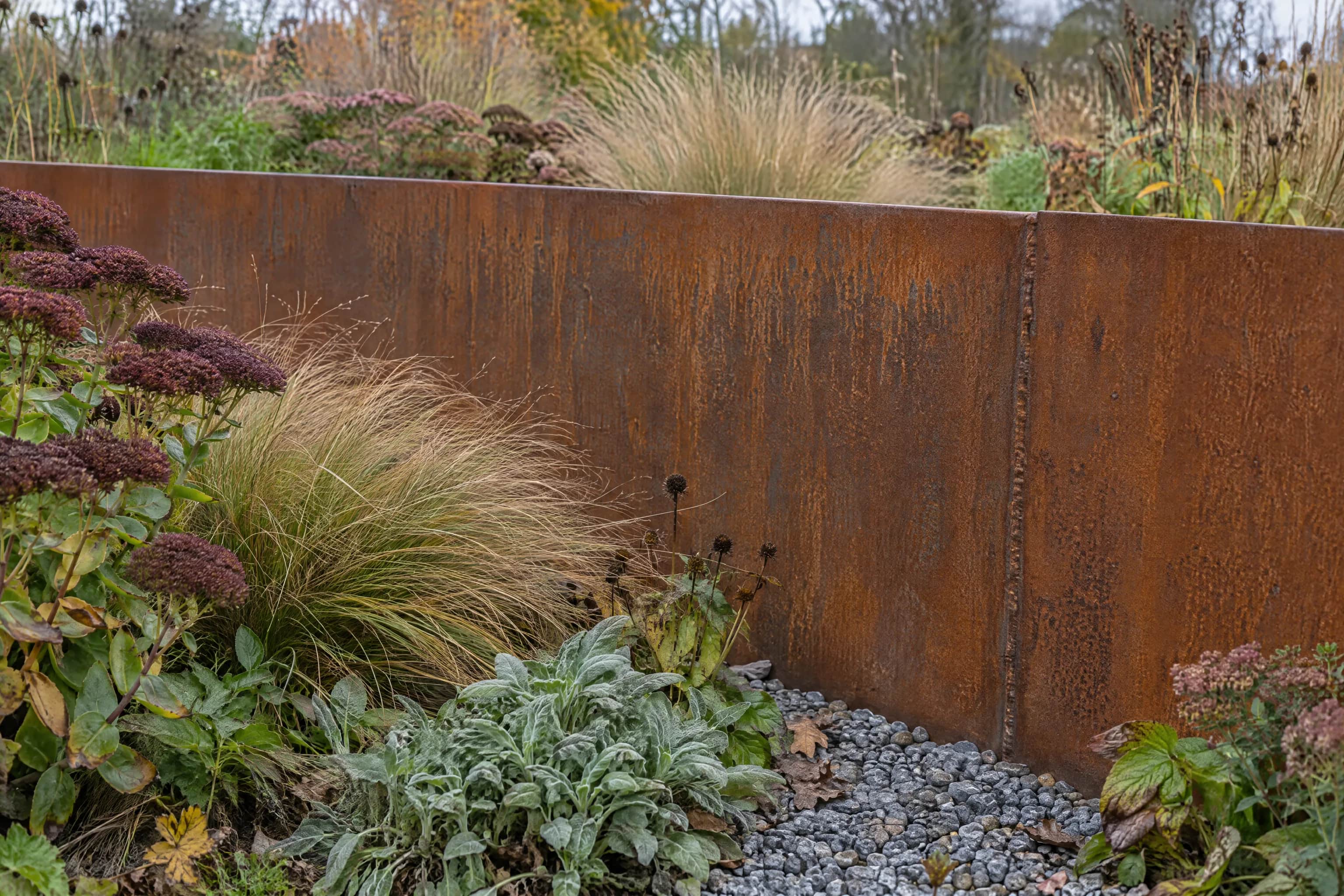
Corten is not rust left to its own devices. It is a weathering steel: its oxide layer bonds to the metal and slows corrosion instead of feeding it. For that it needs an alternation of wet and dry; set under cover, sheltered from the rain, it stays orange and powdery instead of stabilising. The patina settles within one to three years depending on exposure, and we work in thick sheet, because a few tenths of a millimetre are lost along the way.
Stainless, for its part, is chosen. Grade 304 holds up perfectly well in a garden here; 316, which costs more, is justified beside a swimming pool, near a store of road salt or in a chlorinated atmosphere. After welding, the beads are pickled and passivated: the rust coloured streaks seen on a lot of metalwork nearly always come from that, or from ordinary steel dust left by a grinder working nearby.
On painted or galvanised steel, a weld is paid for twice: stripping back before, restoring the zinc and the paint after, failing which the rust starts again from the bead by the second winter. That is why we prefer to draw the whole piece before cutting rather than extend a gate on site. And we say so when metal is not the right answer: to screen yourself from a neighbour, a hedge costs less and does the job better within three years.
A garden pavilion entirely in corten steel, during assembly. The patina has not finished forming. A lighting column in corten: the sheet is cut and then rolled, and the light comes out through the cutouts. Piece shown at a trade fair.
What this covers
Fences and gates
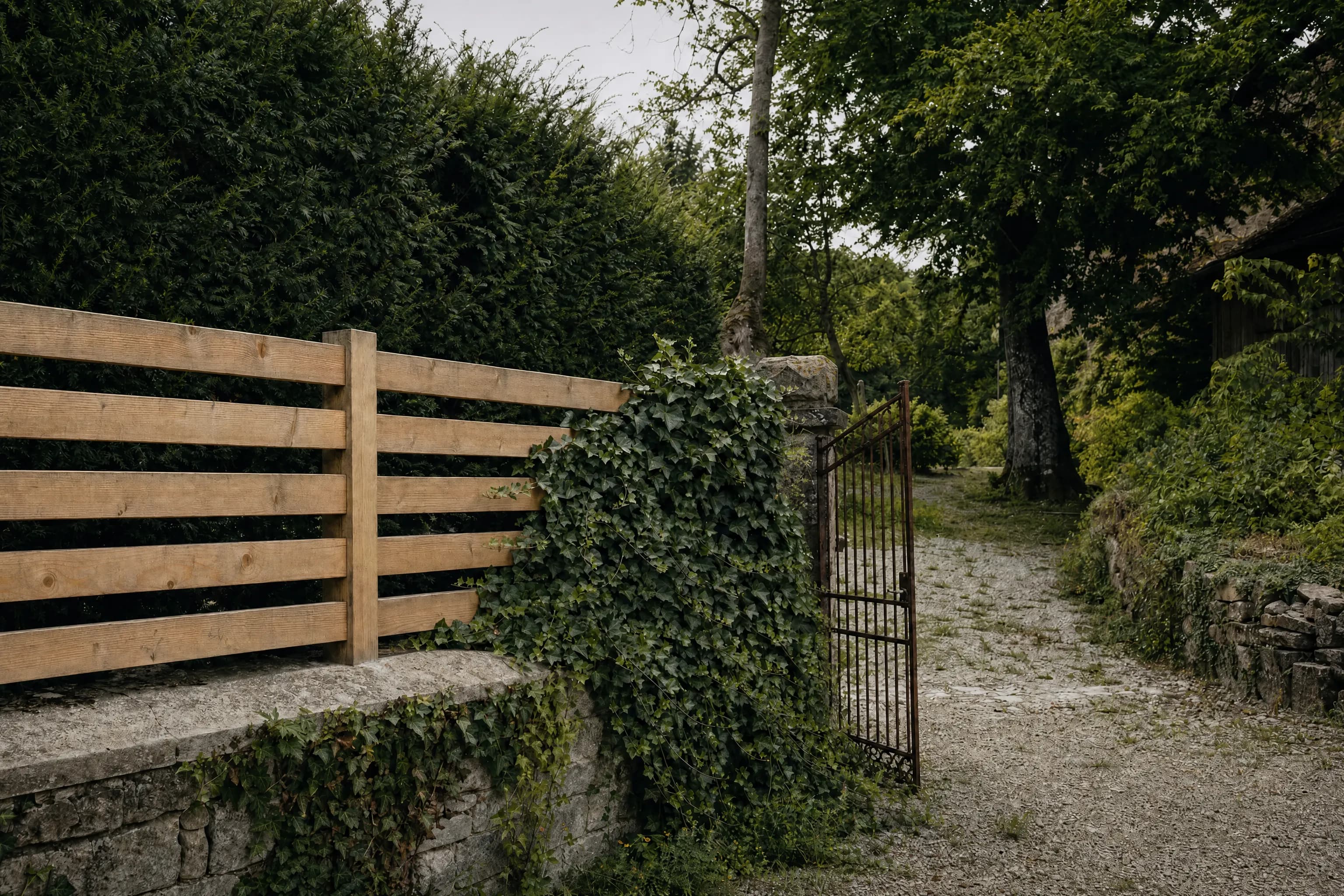
Railings, slats, welded frames: a boundary made to the dimensions of the plot, not a standard panel cut down on site.
Corten panels and screens
Sheet cut to a drawing: screens, wall cladding, dividers. Delivered bare, the patina forms on its own.
Planters and troughs
Planting containers in corten or welded stainless, with drainage, feet and dimensions taken on site.
Lamps and cut pieces
Columns and lanterns in cut sheet, with the light coming out through the cutouts. Installed with the garden lighting, on low voltage.
How it works
The survey
We measure on site, to the millimetre: levels, plumb, the real width of the opening, the fixing point. A welded piece cannot be adjusted during installation, unlike a timber board that can be cut down.
The drawing
A dimensioned plan, the material, the thickness and the method of fixing. That is where corten, stainless or painted steel is decided, and we tell you what each costs to buy and what it will ask of you in ten years.
The workshop
Cutting, profiling, bending, welding, then finishing the beads: ground where the piece is seen, pickled and passivated on stainless. Corten leaves bare, it will weather at your house.
The installation
Set in concrete or fixed on base plates, adjusted to plumb, paint made good where it has been touched. Under a corten piece the first rains stain the ground: we take that into account when we position it, not afterwards.
Frequently asked questions
Often asked for together with
A boundary to set, a shelter to build?
We come and look on site, and the quote is free. We answer messages within two working days.